Types of CPAP Machines Explained: CPAP, APAP, and BiPAP
A diagnosis of Obstructive Sleep Apnea (OSA) can introduce you to a new world of medical terms and therapy options. This guide is designed to clarify how Positive Airway Pressure (PAP) therapy works and explain the primary differences between the available medical devices, empowering you to take a confident, informed step, toward better sleep [1].
Obstructive sleep apnea occurs when the muscles in the upper airway relax during sleep, causing a partial or complete blockage that temporarily interrupts breathing [2]. While OSA is a serious medical condition, it is highly treatable. Initiating and adhering to prescribed therapy is a critical step in protecting your long-term health and well-being.

Why Treating Sleep Apnea Is More Than Just Stopping Snoring
While loud, persistent snoring is a common indicator of OSA, the risks of leaving the condition untreated extend far beyond sleep disruption. The repeated pauses in breathing place significant stress on the cardiovascular system. Over time, this can contribute to an increased risk of developing serious health conditions, including high blood pressure (hypertension), heart disease, and stroke [3], as well as Type 2 diabetes [4].
Furthermore, the fragmented sleep caused by OSA often leads to excessive daytime sleepiness and fatigue. This can impair concentration and cognitive function, reduce overall quality of life, and has been associated with an increased risk of motor vehicle accidents in untreated individuals [5].
One of the primary and most effective treatments for OSA is Positive Airway Pressure (PAP) therapy [6]. This therapy utilizes a device that pressurizes filtered, ambient air and delivers a gentle, steady stream of it through a hose and mask. This continuous airflow acts as a pneumatic splint, helping to keep the airway open and allowing for normal, uninterrupted breathing throughout the night [6].
Decoding the Main Types of PAP Machines
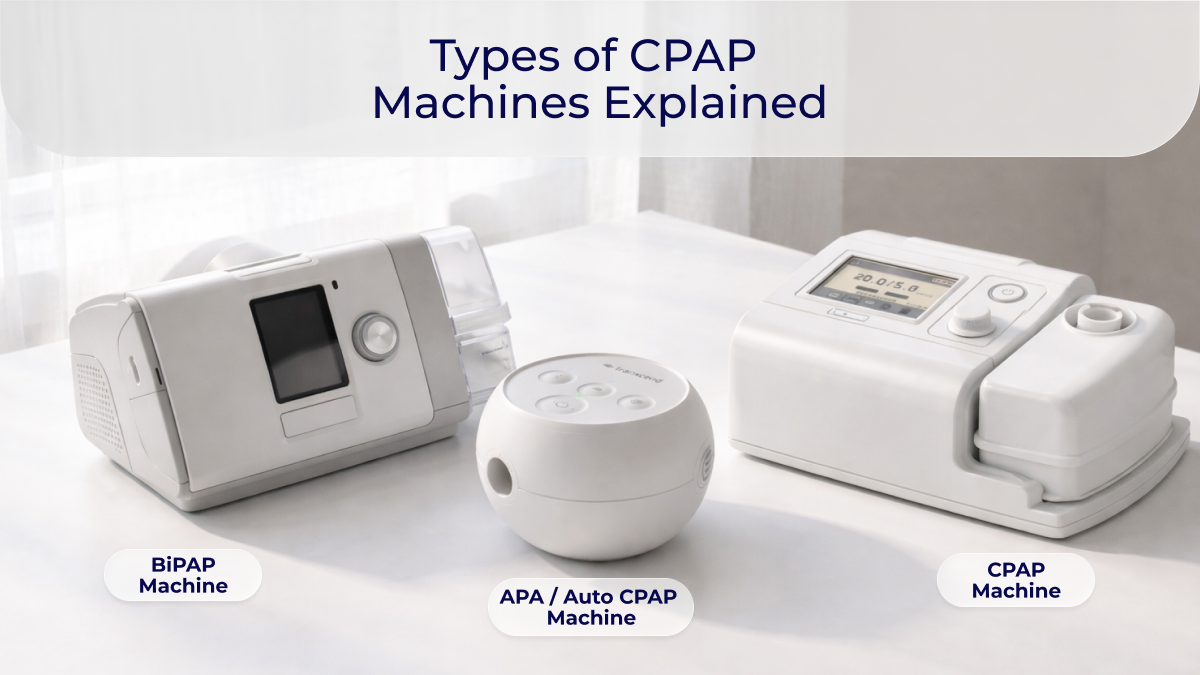
All PAP machines are designed to maintain an open airway, but they employ different methods to deliver pressurized air. Understanding the three main types of devices—CPAP, APAP, and BiPAP—is essential for having an informed discussion with your doctor about which option is best suited to your specific medical needs [6].
1. CPAP (Continuous Positive Airway Pressure)
A CPAP machine is the most traditional form of PAP therapy. It is calibrated to deliver a single, fixed pressure throughout the night, during both inhalation and exhalation. This pressure level is prescribed by a healthcare provider, typically after an in-lab sleep study (polysomnography), which determines the precise pressure required to prevent apnea events [2].
- Best for: Patients with uncomplicated, mild-to-moderate OSA who can comfortably adapt to a constant pressure setting [2].
- Pros: The technology is straightforward, and these devices are often the most affordable option [6].
- Cons: Some users find the constant pressure unnatural, making it feel difficult to exhale. If a patient’s pressure needs change over time (e.g., due to changes in weight or sleeping position), a new sleep study and prescription adjustment may be necessary [6].
2. APAP (Auto-Adjusting Positive Airway Pressure)
An APAP, or Auto-CPAP, machine is a more dynamic option. Instead of a single fixed pressure, it operates within a prescribed minimum and maximum range. Using sophisticated algorithms, the device monitors a user’s breathing on a breath-by-breath basis and automatically adjusts the pressure to the lowest level required to maintain an open airway [6].
- Best for: Individuals whose pressure needs vary during the night (e.g., due to sleep stage or body position) or those who find the constant pressure of a standard CPAP uncomfortable [6].
- Pros: May offer enhanced comfort by delivering a lower average pressure throughout the night. It can also adapt to a user’s changing needs over time, potentially reducing the need for subsequent sleep studies [6].
- Cons: These devices typically have a higher initial cost than standard CPAP machines. For a small number of users, the subtle pressure changes can be disruptive to sleep [6].
3. BiPAP (Bilevel Positive Airway Pressure)
A BiPAP (or BPAP) machine is a more specialized form of therapy. It delivers two distinct, prescribed pressure levels: a higher pressure for inhalation (IPAP) and a lower pressure for exhalation (EPAP). This bilevel system is designed to make breathing feel more natural, particularly for those who have difficulty exhaling against the high pressures required to treat their condition [7].
- Best for: Patients who require very high therapeutic pressures, have not been able to tolerate CPAP therapy, or have certain coexisting respiratory conditions like Chronic Obstructive Pulmonary Disease (COPD) or Central Sleep Apnea [7].
- Pros: Provides maximum breathing comfort, especially at high pressures. It can offer a higher level of respiratory support, functioning similarly to a non-invasive ventilator [7].
- Cons: BiPAP machines are among the most expensive and complex PAP devices [7]. Insurance providers often have stricter coverage criteria, typically requiring documentation that CPAP therapy was attempted and not tolerated.
At-a-Glance: Comparing PAP Therapy Options

| Feature | Standard CPAP | Auto CPAP (APAP) | Bilevel PAP (BiPAP) |
| Pressure Delivery | Fixed, continuous pressure for both inhale and exhale [6]. | Automatically adjusts pressure within a set range based on breathing [6]. | Two distinct pressures: a higher level for inhaling and a lower level for exhaling [7]. |
| Primary Use Case | Uncomplicated OSA [2]. | OSA with varying pressure needs or for users seeking enhanced comfort [6]. | High-pressure needs, CPAP intolerance, or complex respiratory conditions [7]. |
| User Comfort | Some users find it difficult to exhale against the constant pressure [6]. | Generally considered more comfortable due to lower average pressure [6]. | Often provides the most breathing comfort, especially at high pressures [7]. |
| Setup & Titration | Typically requires an in-lab sleep study to determine the fixed pressure [2]. | Can often be titrated at home under clinical supervision [6]. | Requires a detailed in-lab sleep study to set both pressure levels [7]. |
| Relative Cost | Most affordable [6]. | Mid-range price [6]. | Most expensive [7]. |
The Evolution of PAP: When Performance Meets Portability
Modern PAP therapy has evolved significantly from bulky bedside machines. Today’s premier portable devices are full-featured PAP machines, delivering the same intelligent, responsive therapy as their larger counterparts. This convergence of technology means patients no longer have to choose between a primary machine for home and a secondary “travel” machine.
For many users, a single portable device may be capable of serving both their home and travel needs, depending on their specific therapy requirements.
This advancement is made possible by key innovations:
- Advanced Blower Technology: Miniaturized, highly efficient blowers can generate the full therapeutic pressure range in a compact and quiet package [8].
- Waterless Humidification: Traditional heated humidifiers are effective but can be cumbersome. Modern solutions like a Heat and Moisture Exchanger (HME) are designed to capture warmth and moisture from a user’s exhaled breath to provide humidification without the need for distilled water, which makes it more convenient for travel [8].
- Integrated Comfort Features: Technologies that can make therapy more tolerable, such as an adjustable ramp setting (like Transcend’s GentleRise™) and expiratory pressure relief (like Transcend’s AirRelief™), are now standard in many top-tier portable devices [8].
The distinction between “travel” and “everyday” devices has become more about form factor and convenience than core performance. The choice often comes down to a large unit with a water-based humidifier versus a small, ultra-portable unit with the ease of waterless humidification.
Feature Spotlight: A Modern PAP for Home and On the Go
| Feature | Typical At-Home PAP Unit | Transcend Micro™ (A Modern, Portable APAP) |
| Size & Weight | Often larger and heavier, typically weighing 3-5 lbs. | Compact and lightweight, weighing 0.48 lbs (219.5g) [8]. |
| Humidification | Typically requires a heated water chamber and distilled water. | Uses a convenient waterless humidification system (AirMist™ HME) [8]. |
| Exhalation Relief | Yes, a standard feature. | Yes, features AirRelief™ technology for more comfortable exhalation [8]. |
| Ramp Feature | Yes, a standard feature. | Yes, features adjustable GentleRise™ ramp technology [8]. |
| Portability | Designed to be stationary; can be cumbersome for travel. | FAA-compliant for in-flight use; designed for seamless travel and home use [8]. |
| Noise Level | Generally very quiet. | 27 dBA, comparable to a quiet library. The included WhisperSoft™ Muffler further dampens air noise [8]. |
| Mask Compatibility | Universal with standard tubing. | Universally compatible with any CPAP mask that has a standard 22mm connector [8]. |
Making the Right Choice for Your Health and Lifestyle
The journey to finding the right solution begins with a consultation with your physician, who will diagnose your condition and prescribe the appropriate type of therapy (CPAP, APAP, or BiPAP) [2]. This is a medical decision based on your sleep study results and overall health.
Once the therapy type is prescribed, you can make a lifestyle decision about the form factor of your device. Consider the following questions:
- Lifestyle: Do you travel often for work or pleasure? Do you enjoy camping or other activities where access to power might be limited?
- Home Environment: Is your nightstand space limited? Do you prefer a minimalist, uncluttered bedroom?
- Convenience: Would you prefer to avoid the daily task of cleaning and refilling a traditional water-based humidifier?
- Technology: Are you comfortable using a smartphone app (like MySleepDash™) to track your therapy data and share it with your doctor?
Armed with this knowledge, you can have a productive conversation with your healthcare provider to select a device that not only delivers your prescribed therapy but also fits seamlessly into your life.
Important Safety Information
Before starting any PAP therapy, it is crucial to discuss your full medical history with your physician. The Transcend Micro™ may be contraindicated in patients with certain conditions, including bullous lung disease, pathologically low blood pressure, pneumothorax, or a history of cerebral spinal fluid (CSF) leaks. For a complete list of contraindications, warnings, and potential adverse effects, please refer to the official Transcend Micro™ User Manual [8].
Frequently Asked Questions
What is the difference between APAP and BiPAP?
While both are designed to improve breathing comfort, they function differently. An APAP (Auto-adjusting Positive Airway Pressure) machine automatically varies a single pressure throughout the night, delivering the lowest effective pressure needed at any given moment. A BiPAP (Bilevel Positive Airway Pressure) machine delivers two distinct, preset pressures: a higher one when you inhale and a lower one when you exhale. Due to this dual-pressure system, BiPAP is often prescribed for patients who require higher pressure settings or have additional respiratory conditions [7].
Why would my doctor prescribe a standard CPAP instead of an APAP?
A standard CPAP is often the first-line treatment for uncomplicated OSA. Because it is a simpler and often more affordable device, your doctor may prescribe it if your sleep study indicates that a single, consistent pressure is effective for you and you can adapt to it comfortably [2].
Do all PAP machines require an in-lab sleep study?
Not always. Traditional CPAP and BiPAP machines typically require an in-lab titration study (polysomnography) to determine the correct pressure settings [2]. However, one of the advantages of APAP technology is its ability to automatically adjust pressure. This may allow some patients to begin therapy effectively at home under the guidance of their physician, potentially without a separate in-lab titration study [6].
Do I need to use my PAP machine every night?
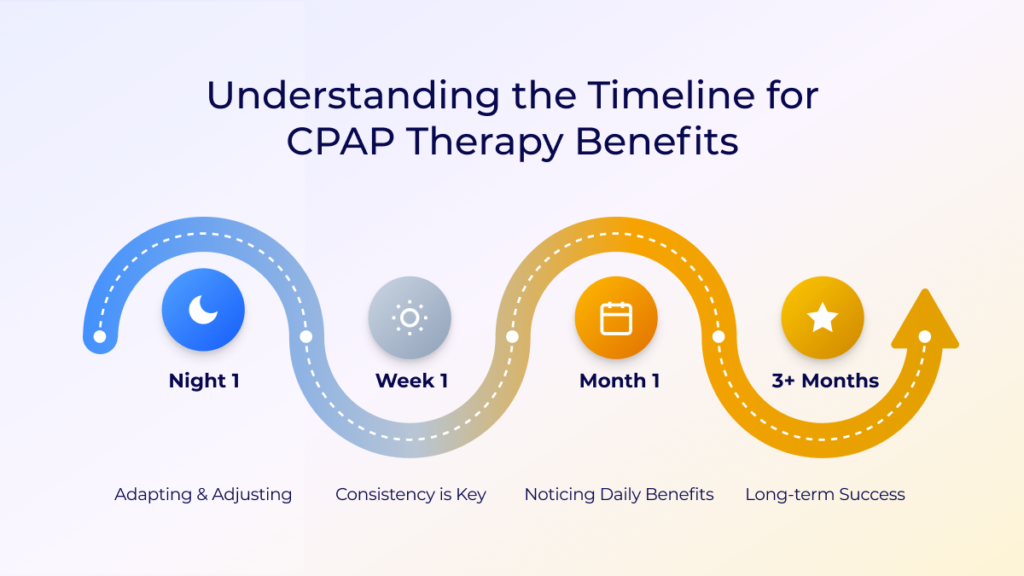
Yes. For PAP therapy to be effective, consistent use is essential. Clinical evidence shows a clear dose-response relationship, meaning more hours of use per night leads to better control of symptoms and improved daytime functioning [9]. Skipping nights can lead to a rapid return of snoring, fatigue, and other sleep apnea symptoms, and may negate the long-term health benefits of therapy.
Disclaimer
The information provided in this article is for general informational and marketing purposes only. It is not intended to be a substitute for professional medical advice, diagnosis, or treatment. Please consult with your physician or another qualified healthcare provider if you have any questions about a medical condition or the use of a CPAP device. The Transcend Micro™ CPAP is a medical device that requires a prescription and should be used only as directed by a physician. For detailed information on indications for use, contraindications, warnings, and precautions, please refer to the official Transcend Micro™ User Manual [8].
References
- Weaver, T.E. & Grunstein, R.R. (2008). Adherence to Continuous Positive Airway Pressure Therapy: The Challenge to Effective Treatment. Proceedings of the American Thoracic Society, 5(2), 173–178. https://pmc.ncbi.nlm.nih.gov/articles/PMC2645251/
- Mayo Clinic. (2024). Obstructive sleep apnea – Symptoms and causes. https://www.mayoclinic.org/diseases-conditions/obstructive-sleep-apnea/symptoms-causes/syc-20352090
- Somers, V.K. et al. (2021). Obstructive Sleep Apnea and Cardiovascular Disease: A Scientific Statement From the American Heart Association. Circulation, 143(16), e714–e783. https://www.ahajournals.org/doi/10.1161/CIR.0000000000000988
- Reutrakul, S. & Mokhlesi, B. (2017). Obstructive Sleep Apnea and Diabetes: A State of the Art Review. Chest, 152(5), 1070–1086. https://pmc.ncbi.nlm.nih.gov/articles/PMC5812754/
- Tregear, S. et al. (2009). Obstructive sleep apnea and risk of motor vehicle crash: systematic review and meta-analysis. Journal of Clinical Sleep Medicine, 5(6), 573–581. https://jcsm.aasm.org/doi/10.5664/jcsm.27662
- Donovan, L.M. et al. (2015). New developments in the use of positive airway pressure for obstructive sleep apnea. Journal of Thoracic Disease, 7(8), 1323–1342. https://pmc.ncbi.nlm.nih.gov/articles/PMC4561253/
- Cleveland Clinic. (2024). BiPAP Machine: Uses, Benefits, Side Effects & Alternatives. https://my.clevelandclinic.org/health/treatments/24970-bipap
- Transcend Inc. (2025). Transcend Micro User Manual (104149 Rev F). Available at: https://mytranscend.com/wp-content/uploads/2025/12/104149-Rev-F.pdf
- Weaver, T.E. et al. (2007). Relationship Between Hours of CPAP Use and Achieving Normal Levels of Sleepiness and Daily Functioning. Sleep, 30(6), 711–719. https://pmc.ncbi.nlm.nih.gov/articles/PMC1978355/